
Your Phone Went in the Sea. Now the Speaker Sounds Terrible — What to Do Next
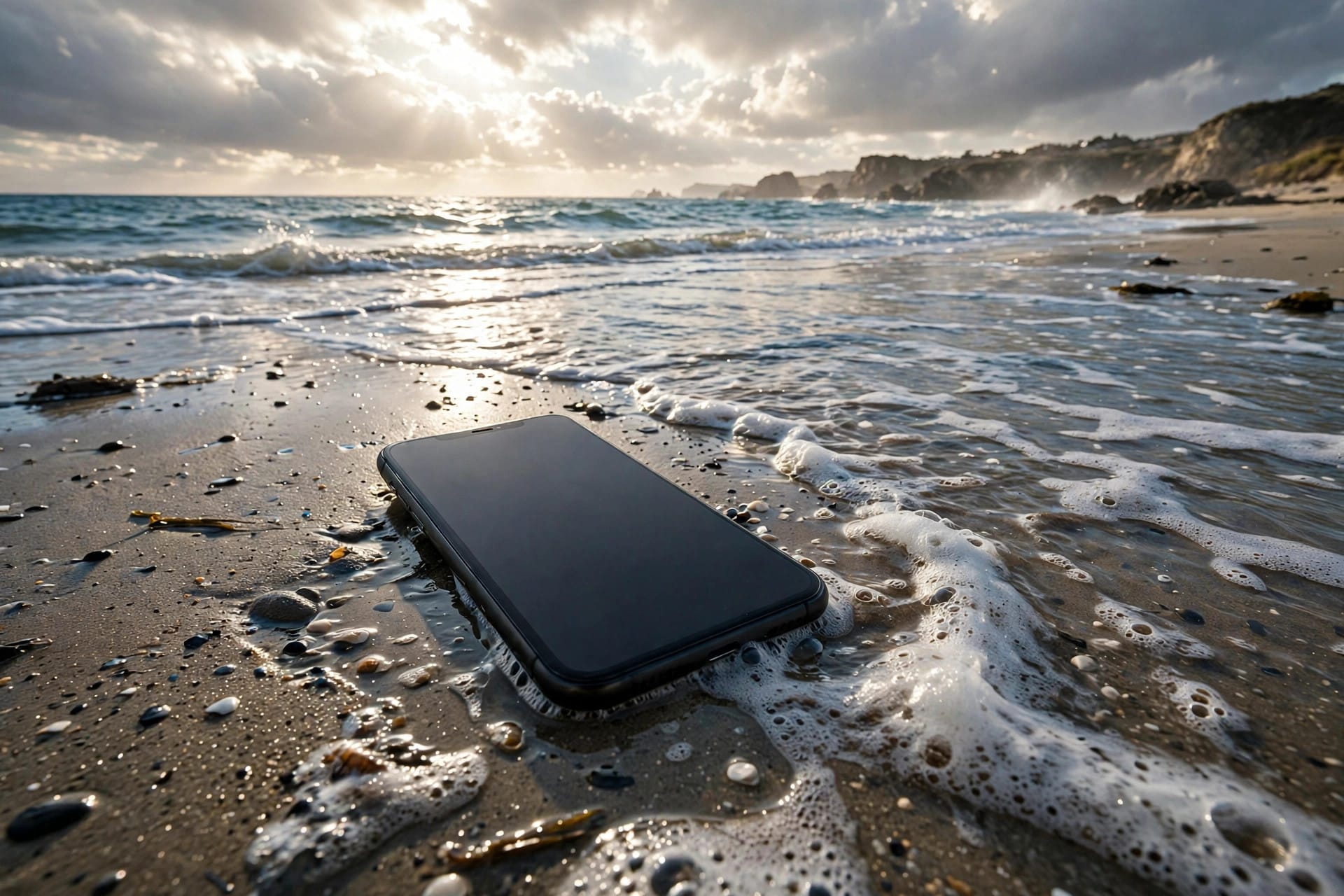
Salt water is the worst thing your phone speaker can meet — worse than rain, tap water, or pool water. It corrodes metal contacts within hours and leaves a crusty mineral layer behind that keeps sound muffled long after everything dries. If your phone went in the sea, power it off now, don’t charge it, and work fast.
Why Salt Water Is Different From Every Other Liquid
Most water-damage advice treats all water the same. With salt water, that advice will cost you, because the real enemy isn’t the moisture — it’s what the water leaves behind.
Fresh water mainly causes trouble while it’s wet; once it evaporates, a phone often recovers completely. Salt water plays by different rules, and there are three reasons why.
First, it corrodes metal fast. Salt is an electrolyte, which dramatically speeds up corrosion on copper contacts, solder joints, and speaker connections. Damage can begin within hours, not days.
Second, it leaves residue behind. When salt water evaporates, the salt crystallises into a crusty layer on the membrane. That crust adds weight and stiffness that dulls the sound permanently, even when the phone is bone dry.
Third, it’s far more conductive while it’s wet, so the risk of short-circuit damage while the phone is still damp is much higher than with fresh water. A phone that survived a swimming pool might never fully recover from seawater.
The First Minute: Power Off and Don’t Charge
Power the phone off completely the moment you realise salt water got in. Electricity plus salt water is the fastest route to corrosion and short circuits, and a phone that’s on is a phone that’s corroding. Don’t plug it in to “see if it still works” — charging a wet phone can fry components that would otherwise survive.
Keep it off until you’re confident it’s fully dry, which means at least 24 to 48 hours. Resist the urge to keep checking it — every time you power it on wet, you’re giving corrosion another chance.
Wipe the Salt Off Before It Dries
Get as much salt water off the phone as you can before it dries on, because dried salt is far harder to deal with than wet salt. Take the case off immediately — cases trap salt water against the body and hold it there for hours.
Wipe the entire phone with a clean microfiber cloth dampened with fresh water, wrung out until it’s nearly dry. Pay special attention to the speaker grille, the charging port, and the microphone holes, but don’t push the cloth into the openings.
Should You Rinse It With Fresh Water?
You’ll find conflicting advice on this, so here’s the straight version. A brief rinse can wash dissolved salt out of the grille — but it also introduces more water, which carries its own risks. Whether it’s worth it depends on how bad the exposure was.
For light exposure — sea spray, a few splashes, a wave that caught the phone for a second — skip the rinse. Thorough wiping is enough, and extra water isn’t worth the risk.
For a phone that was submerged or properly soaked in seawater, a quick rinse under a gentle stream of clean fresh water for a few seconds can dissolve trapped salt before it crystallises. Shake off the excess water immediately, speaker-down.
Never soak the phone, never use hot water, and never rinse a phone with a cracked screen — a rinse just delivers water straight to the internals.
Drain It, Then Shake the Water Out With Sound
Gravity first. Hold the phone speaker-down, tap the back gently against your palm five or six times, then rest it speaker-down on a dry cloth for 15 to 20 minutes. That gets the bulk of the water out.
Then get the trapped droplets out actively, because every droplet left inside is a future corrosion spot. There’s a free speaker-cleaner tool on this site that plays a 165Hz tone: open it, turn the volume to maximum, hold the phone speaker-down, and play the tone for 30 to 60 seconds. Wipe away what appears and repeat two or three times. The full technique is in our water removal guide.
Then fan-dry it for hours: place it speaker-down in front of a fan blowing cool air and leave it there, longer than you would for a freshwater splash. Don’t rush this part.
What About Pool Water?
Chlorinated pool water sits between fresh and salt water in severity. Chlorine is corrosive too, though slower than salt, and pool chemicals leave their own mineral residue. Treat pool exposure the same way: power off, wipe down, drain by gravity, run the tone, and fan dry.
If the speaker still sounds dull after 48 hours, mineral buildup is the likely culprit — worth a repair-shop visit before the residue hardens further.
Four Mistakes That Make Corrosion Worse
- Don’t use rice. It can’t pull trapped water out, it works far too slowly to beat corrosion, and it adds starch dust.
- Don’t use heat. No hairdryers, sunlight, or radiators — heat accelerates corrosion and can warp seals.
- Don’t charge the phone until it has been dry for at least 24 to 48 hours. Charging a damp phone is how good phones die.
- Don’t insert anything into the grille to “scrape out” salt. You’ll damage the membrane, and the salt is inside the phone anyway, not just on the surface.
Warning Signs to Watch Over the Next Few Days
Salt corrosion doesn’t always show up immediately. Over the following days, watch for sound getting progressively worse, a new crackling quality, green or white crust around the grille or charging port, or other functions — charging, buttons, the microphone — acting up.
If you see any of these, visit a repair shop promptly and mention the salt water exposure specifically. A technician can clean corrosion off the internals with proper contact cleaner, which no home method can do. The sooner you go, the better the odds.
Frequently Asked Questions
Will my speaker recover after salt water exposure?
It can if you act within the first hour or two: power off, wipe away the salt, drain the water, eject moisture with a tone, and dry it thoroughly.
Is pool water as bad as salt water?
Not quite — salt corrodes faster and leaves heavier residue. But chlorinated water is still significantly worse than fresh water, so use the same fast-response steps.
Can I rinse my phone under the tap after seawater exposure?
A brief fresh-water rinse helps dissolve trapped salt after submersion — but skip it for light splashes, and never rinse a phone with a cracked screen.
How fast does salt water damage a speaker?
Corrosion can begin within hours on exposed metal contacts. Every hour of delay gives it a head start — which is why speed matters more with salt water than any other liquid.