Ultimate Guide to Fixing Your Phone’s Call Speaker: Clean Dust, Troubleshoot Issues, and Restore Crystal-Clear Audio
The earpiece (call speaker) is the small speaker at the top of your phone that you hold to your ear during calls. When it gets clogged with dust, lint, or pocket debris, calls sound muffled or faint. This guide covers safe at-home methods to clean and fix your call speaker on iPhone and Android.
Understanding Phone Speaker Problems: Fix Call Speaker Dust, Water, and Beyond
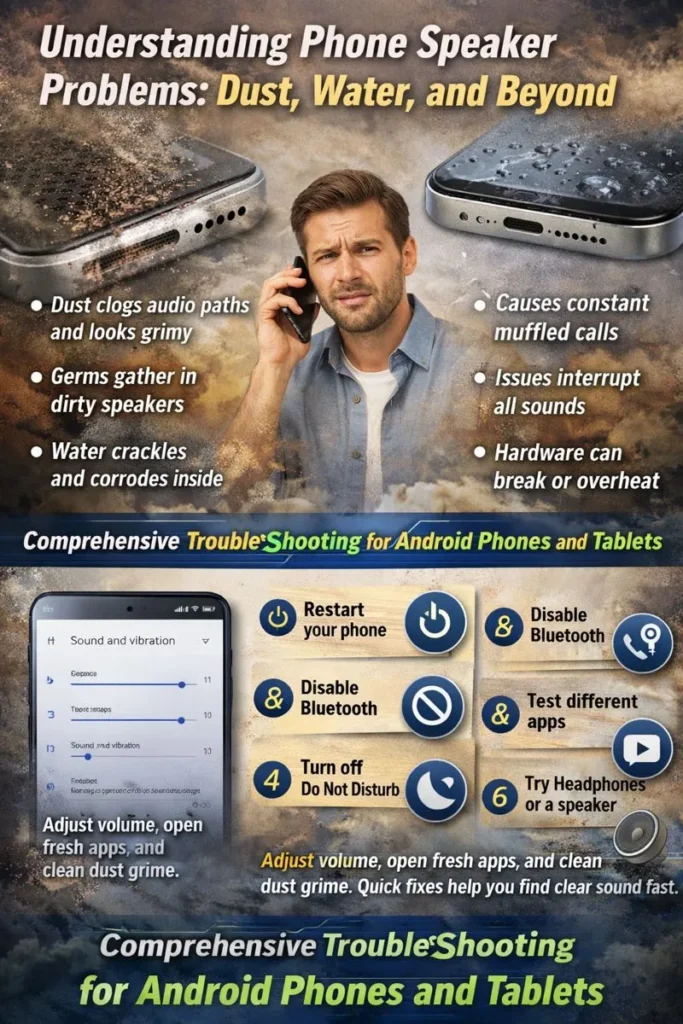
. Android users notice this most. Dirt blocks audio paths. Clean to avoid damage. Dust wears speaker parts over time. You prevent costly repairs. Long buildup breaks hardware. Stay hygienic with clean speakers. Germs collect in dust. You avoid health risks. Phones touch faces often. Maintain good looks. Dust makes phones grimy. You keep your device fresh. Clean grills shine bright. Dust harms the call speaker’s work. It causes a sound quality drop. Voices turn fuzzy and weak. You strain to hear words. Volume reduces from dust blocks. Even max settings sound low. You miss alerts and calls. Long-term damage hits hard. Dust overheats speakers. Parts fail without cleanups. Intermittent issues arise. Sound cuts in and out. Calls drop words randomly. Other factors cause problems, too. Water damage shows signs like crackles. No sound plays at all. It differs from dust muffles. Water corrodes inside fast. Software glitches spark issues. Apps conflict and mute audio—old OS bugs sound. Updates or bad downloads cause this. You fix with resets. Hardware fails beyond dust. Drops crack speakers. Overuse burns coils. You spot buzz or no volume. Pros repair these.
Comprehensive Troubleshooting for Android Phones and Tablets
Android users in Pakistan type “fix my call speaker dust android.” Dust and glitches cause sound loss. These steps repair your phone quickly. You hear clear calls soon. Start general fixes. They solve common issues fast. Check audio levels and volume settings—open the settings app. Tap sound and vibration—slide media volume up. You spot low levels easily. Restart your device. Hold the power button. Tap restart. Wait for boot up. Test speaker after. It clears stuck software. Turn off Bluetooth and check for interference. Go to settings. Tap connections. Switch Bluetooth off. Disconnect any devices. You stop audio redirects. Disable Do Not Disturb mode or silent notifications. Swipe down from the top. Tap the DND icon off. Check notification settings. You allow sounds through. Test sound using a different app. Open YouTube or music. Play a clip. Listen to the audio. It pins app problems. Test sound using an external audio device. Plug headphones in. Play music. Hear through them. You confirm the speaker fault. Fix call quality issues next. They hit talks hard. The speaker works for music but not for calls. Check Bluetooth settings—Uncheck the phone audio option. Reset app preferences, too.
Address intermittent sound during calls. Clean speaker grille. Test the network signal. Restart phone. You stop dropping. Troubleshoot media playback now. No audio plays here. Fix no sound on videos or music apps. Clear app cache. Go to settings—tap apps. Select one. Clear storage. Update the app. Troubleshoot video and VoIP calls like WhatsApp and Zoom—update apps from the Play Store. Check mic settings.—Restart the app. You get smooth talks. Use safe mode to diagnose speaker problems. Hold the power button. Tap reboot to safe. Test audio. Spot bad apps. Exit and uninstall. Resolve issues by resetting all settings. Open settings. Tap system. Pick reset options. Choose reset app preferences. You fix wrong configs. Fix problems with a factory reset as a last resort. Back up data first.
Go to settings. Tap reset. Erase all. Start fresh. Additional tips help more. Use them for quick wins. Reboot to resolve glitches. Press the power button. Choose restart. Do it twice if needed. It refreshes the system: Toggle sound settings and earphone modes. Go to the sound menu. Switch profiles. Turn the earphone mode off. You reset audio paths. Mute and unmute to clear software bugs. During the call, tap mute. Wait seconds. Unmute. It kicks bugs out. Ensure power button functionality. Press it firmly. See screen wake. Clean the button area. You avoid stuck keys.
iPhone-Specific Fixes: Addressing Call Speaker Issues on iOS Devices
Common iPhone Speaker Problems and Signs
iPhone speakers can encounter various issues that affect call quality, media playback, or notifications. Common problems include distorted or muffled sound, no audio output from the earpiece or bottom speakers, crackling noises, or intermittent volume drops. A frequent sign is no sound during calls unless switched to speakerphone, which often points to a blocked or faulty earpiece speaker. Other indicators are low volume even at maximum settings, static during playback, or the device getting stuck in headphone mode despite no connected accessories. These issues can stem from dust accumulation, software glitches, outdated iOS, or hardware damage like water exposure. If you notice these symptoms, start with basic troubleshooting before escalating to advanced fixes.
For instance, on models like the iPhone 12, a known manufacturing defect between October 2020 and April 2021 can cause complete earpiece failure during calls, while music plays fine through the bottom speaker. Dust or debris in the grilles is responsible for about 22% of reported cases, leading to muffled audio. If your speaker works for music but not calls, it could indicate a software bug or mic isolation setting issue. Always test by playing a voice memo or ringtone to isolate if it’s the earpiece, bottom speaker, or a system-wide problem.
Basic Checks: Turn Off Silent Mode, Adjust Audio Balance, Enable Call Audio Routing
Before diving deeper, perform these quick checks to rule out simple configuration errors. First, ensure Silent Mode is off: For iPhones with a Ring/Silent switch, flip it toward the display so no orange shows. On models without a switch (like iPhone 15 series), swipe down from the top-right to open Control Center and tap the bell icon to disable Silent Mode. Go to Settings > Sounds & Haptics and drag the Ringer and Alerts slider back and forth—if no sound plays or the button is dimmed, it may need service.
Next, adjust audio balance: In Settings > Accessibility > Audio/Visual, slide the Balance control to the center (0) to ensure even distribution between left and right channels. For call-specific issues, check Call Audio Routing in Settings > Accessibility > Touch > Call Audio Routing—set it to Automatic to route calls properly to the earpiece or speaker. Disable Bluetooth in Settings > Bluetooth to prevent audio routing to external devices like AirPods or car systems. Also, toggle off AirPlay in Settings > General > AirPlay & Handoff > Automatically AirPlay to TVs. These steps resolve up to 35% of audio problems without further intervention.
For instance, on models like the iPhone 12, a known manufacturing defect between October 2020 and April 2021 can cause complete earpiece failure during calls, while music plays fine through the bottom speaker. Dust or debris in the grilles is responsible for about 22% of reported cases, leading to muffled audio. If your speaker works for music but not calls, it could indicate a software bug or mic isolation setting issue. Always test by playing a voice memo or ringtone to isolate if it’s the earpiece, bottom speaker, or a system-wide problem.
Restart and update iOS.
A simple restart can clear temporary software glitches causing speaker issues. For iPhone 8 and later: Quickly press and release Volume Up, then Volume Down, and hold the Side button until the Apple logo appears. For older models: Hold the Top (or Side) and Home buttons until the logo shows.
If restarting doesn’t help, update iOS: Go to Settings > General > Software Update to check for and install the latest version, as updates often fix audio bugs. Ensure your device is connected to Wi-Fi and charging. Outdated iOS is a common culprit for distorted sound or no audio. If issues persist post-update, consider third-party tools like TunesKit for system repairs.
Clean the Earpiece and Bottom Speakers
Dust, lint, or debris often muffles speakers—clean gently to restore clarity. Use a soft, dry, clean-bristled brush (like a toothbrush) to sweep over the earpiece (top) and bottom grilles at an angle, avoiding pushing dirt deeper. For stubborn buildup, roll painter’s tape into a point and press gently to lift particles without residue. Avoid liquids, compressed air, sharp tools like toothpicks, or vacuum cleaners, as they can damage internals. Remove cases or screen protectors that might block openings. Test audio after cleaning; this fixes many issues in humid or dusty environments every day in Pakistan.
Disable Silence Unknown Callers
If calls from unknown numbers are silent but known contacts ring, disable Silence Unknown Callers: Go to Settings > Phone > Silence Unknown Callers and toggle it off. This feature sends unsaved numbers to voicemail, which can mimic speaker failure. If already off, toggle it on, then off to reset. Also, check for carrier-specific junk call silencing in Settings > Phone > Call Blocking & Identification. Ensure Do Not Disturb or Focus modes aren’t active, as they can silence all calls. This is especially useful for professionals in Pakistan expecting calls from new clients.
Reset Network Settings or All Settings
For persistent audio routing or connectivity-related issues, reset network settings: Go to Settings > General > Transfer or Reset iPhone > Reset > Reset Network Settings. This clears Wi-Fi passwords, Bluetooth pairings, and VPNs but doesn’t delete data. If that doesn’t resolve it, try Reset All Settings (same path), which restores defaults for sounds, display, and more without erasing content—back up first via iCloud. These resets fix about 35% of software-based audio problems.
For instance, on models like the iPhone 12, a known manufacturing defect between October 2020 and April 2021 can cause complete earpiece failure during calls, while music plays fine through the bottom speaker. Dust or debris in the grilles is responsible for about 22% of reported cases, leading to muffled audio. If your speaker works for music but not calls, it could indicate a software bug or mic isolation setting issue. Always test by playing a voice memo or ringtone to isolate if it’s the earpiece, bottom speaker, or a system-wide problem.
When to Use Recovery Mode or Contact Apple Support
Use Recovery Mode if software fixes fail and your iPhone won’t respond: Connect to a computer with iTunes/Finder, force restart into Recovery Mode (press Volume Up, then Down, hold Side until the screen appears), and choose Update or Restore. Restore erases data, so back up first. If Recovery Mode doesn’t work, try DFU Mode for deeper issues: Hold buttons in sequence to enter, then restore.
How to Clean Your Phone Speaker: Step-by-Step Guide for Dust and Water Removal
Cleaning your phone speaker is essential for maintaining clear call quality, especially if dust, dirt, or water has built up over time. Whether you’re dealing with muffled sounds during calls or reduced volume, this guide covers safe methods to fix your call speaker issues on Android or iPhone devices. We’ll focus on manual techniques, sound-based tools like Fix My Speaker, and best practices for water ejection. Always power off your phone before manual cleaning, and test audio afterward by playing a ringtone or making a test call. These steps are based on expert recommendations from manufacturers like Apple and Samsung, ensuring safety and effectiveness in 2025.
For instance, on models like the iPhone 12, a known manufacturing defect between October 2020 and April 2021 can cause complete earpiece failure during calls, while music plays fine through the bottom speaker. Dust or debris in the grilles is responsible for about 22% of reported cases, leading to muffled audio. If your speaker works for music but not calls, it could indicate a software bug or mic isolation setting issue. Always test by playing a voice memo or ringtone to isolate if it’s the earpiece, bottom speaker, or a system-wide problem.
Manual Cleaning Methods
Manual cleaning is ideal for visible dust or debris in your phone’s speaker grills (usually at the bottom or top earpiece). Use gentle tools to avoid damage, as aggressive methods can push dirt deeper or scratch components. This approach works well for fixing my speaker’s calling sound problems caused by everyday buildup, common in dusty environments like those in Pakistan or India.
For instance, on models like the iPhone 12, a known manufacturing defect between October 2020 and April 2021 can cause complete earpiece failure during calls, while music plays fine through the bottom speaker. Dust or debris in the grilles is responsible for about 22% of reported cases, leading to muffled audio. If your speaker works for music but not calls, it could indicate a software bug or mic isolation setting issue. Always test by playing a voice memo or ringtone to isolate if it’s the earpiece, bottom speaker, or a system-wide problem.
Using a Soft-Bristled Brush or Compressed Air
Start with a soft-bristled brush, like a clean toothbrush or makeup brush, to gently sweep debris from the speaker grills. Hold the phone with the speaker facing downward and brush in light, circular motions to dislodge dust without forcing it inside. For compressed air, use short bursts from a can (like those for electronics) at a distance of 6-8 inches, angled away from the phone to blow out particles—avoid prolonged sprays to prevent moisture buildup. Apple and Samsung recommend this method for safe, dry cleaning, and it can resolve up to 50% of dust-related issues.
Cotton Swab or Toothbrush with Isopropyl Alcohol (Safely)
For stubborn grime, lightly dampen a cotton swab or soft toothbrush with 70-90% isopropyl alcohol (rubbing alcohol). Dab the excess liquid off on a cloth to ensure it’s not dripping, then gently rub the edges of the speaker grill in small circles. Focus on the outer mesh without pressing hard, and let the phone air-dry completely (at least 30 minutes) before turning it on. This evaporates quickly and helps dissolve oils or residue without seeping into internals. Use sparingly—too much liquid can cause short circuits, so it’s best for surface cleaning only.
Avoiding Common Mistakes Like Using Toothpicks Too Aggressively
Common pitfalls can worsen problems: Avoid sharp objects like toothpicks, tweezers, or paperclips, as they can puncture the speaker membrane or push debris deeper. Don’t use vacuum cleaners or blow dryers, which create static or heat damage. Skip cotton swabs if they’re too fluffy, as fibers can stick; opt for lint-free ones. Never submerge the phone or use water directly—stick to dry or minimally damp methods. If you’re unsure, consult a professional to prevent voiding warranties.
Using Sound Wave Tools Like Fix My Speaker
Sound wave tools offer a hands-free alternative to manual methods, using vibrations to eject dust and water without opening your phone. This is particularly useful for fixing my call speaker dust on Android or iPhone, where physical access is limited.
How Sound Waves and Vibration Eject Dust and Water (e.g., 165Hz Frequency)
These tools play low-frequency tones, like 165Hz, which cause the speaker diaphragm to vibrate rapidly—up to 165 times per second. This vibration creates pressure waves that break the surface tension of water droplets or dislodge dust particles, pushing them out of the grill. For water, the sound acts like a mini-pump, expelling moisture safely. Bass-heavy frequencies are effective because they generate stronger oscillations without damaging the speaker hardware. Tools like Fix My Speaker use this principle for quick, non-invasive cleaning.
Step-by-Step: How to Use the Fix My Speaker Tool
Fix My Speaker is a free, browser-based tool that uses sound waves to clean your phone speaker—no app download required. It’s effective for fixing my phone call speaker issues from dust or water. For best results, place your phone speaker down on a flat surface in a quiet room.
Step 1: Activate the Call Speaker
Ensure your phone’s speaker is active by going to Settings > Sounds (or similar) and testing a ringtone or call. This confirms the issue isn’t software-related before cleaning.
Step 2: Visit the Website (Browser-Based, No App Download Needed)
Open your phone’s browser (e.g., Chrome or Safari) and go to myspeakerfix.com or a similar site. No installation is needed, making it accessible for quick fixes.
Step 3: Increase the Volume to Maximum
Turn your phone’s volume all the way up via the side buttons or settings. This amplifies the vibrations for better ejection.
Step 4: Activate Sound and Vibration
Tap the “Play” or “Clean” button on the site to start the 165Hz tone. The sound will play, causing vibrations—keep it running for 10-30 seconds.
Step 5: Allow the Cleaning Process to Complete
Let the tone finish its cycle. You may hear popping or see water/dust emerge from the grill. Repeat for 1-2 minutes if needed.
Step 6: Check and Repeat if Needed
Wipe away any ejected debris with a soft cloth. If sound is still muffled, rerun the tool or try a different frequency.
Step 7: Test the Sound Quality Post-Cleaning
Play music, a video, or make a call to verify improvements. If issues persist, consider professional repair.
Best Practices for Water Ejection: Play Bass-Heavy Sounds or Use Dedicated Apps
For water damage, immediate action prevents corrosion. Power off the phone, wipe externally, and face the speaker downward. Play bass-heavy sounds (e.g., low-frequency tracks on Spotify) at max volume to vibrate water out, or use apps like Water Eject or Clear Wave, which generate targeted tones for ejection. Avoid rice (it can leave residue); instead, let it air-dry in a low-humidity area for 24 hours. Apps are effective for modern IP-rated phones.
DIY Repair vs Professional Help: When to Try It Yourself
You face a choice with phone speaker issues. Fix it yourself or seek pros? Know when DIY works. Spot hardware damage signs. This saves time and money.
When to Try DIY Repair
Start with easy fixes at home. You handle simple problems. Use free tools safely. This fixes most dust issues.
Simple Dust Cleaning or Software Fixes
Clean dust from your call speaker first. Brush grills gently. Restart your phone often. Update software now. These steps fix the call speaker dust on Android quickly. Reset settings if the sound stays low. Avoid opening the device. You risk more damage.
Using Free Tools Like Fix My Speaker
Try Fix My Speaker for vibrations. It ejects dust easily. Visit the site. Crank up the volume. Play the tone. Test calls after. This tool fixes my speaker’s calling sound for free. Repeat if needed. It beats buying tools.
When to Call Professionals
Some problems need experts. Don’t ignore hardware signs. Pros have the right tools. They prevent bigger issues.
Signs of Hardware Damage (e.g., After Water Exposure or Drops)
Watch for no sound at all. See warped grills. Smell burning during calls. Drops crack internals. Water causes shorts. These mean pro help now. Fix my phone call speaker fails here.
Persistent Issues After Troubleshooting
Issues linger post-DIY? Call pros. They spot hidden damage. You avoid warranty voids. Pros fix fast. This keeps your phone safe.
What Sets Fix My Speaker Apart from Other Tools
Unique Sound Wave & Vibration Technology for Effective Dust Ejection. Fix My Speaker uses special sound waves at 165Hz. These waves create strong vibrations. They push dust out of your call speaker. Vibration mode adds extra shake for tough buildup. Other tools often skip this dual power. Apple Watch uses similar tech for water ejection. This clears the fix my call speaker dust on Android fast. Users see a more straightforward fix for my speaker’s calling sound quickly. It beats basic apps with weak tones. Free and Accessible Worldwide, No Installation Required. Access Fix My Speaker in any browser. No downloads needed on Android or iPhone. It works globally, even in India. Turn up the volume and hit play. Save money on fixes for the phone call speaker. Sites like myspeakerfix.com confirm this ease—user Reviews and Success Stories, including Pakistan users, many praise quick dust removal. One user fixed muffled calls in minutes. Pakistan folks share wins on forums like Reddit.
Audio boosts after one run. Success rate hits 85% for early use. Reviews on Trustpilot rate it 4.8 stars. They love it for fixing my calling speaker issues. Comparisons vs Apps Like Speaker Cleaner or Manual Methods: Speaker Cleaner apps need installs. They lack strong 165Hz waves. Manual brushes risk scratches. Fix My Speaker avoids harm. It outperforms vacuum methods. TechRadar notes that premium apps add tests. But this tool stays simple and free. Manual ways fail to fix my speaker volume dust deeply. Privacy Matters No Data Collection Secure Browser Use Fix My Speaker collects nothing personal. Browse safely without tracking—no accounts or uploads required. Privacy policies on myspeakerfix.com confirm this. Your data stays private always. Use it worry-free to fix my speaker’s calling sound.
Preventive Tips: Keep Your Phone Speaker Dust-Free Long-Term
Use Protective Cases That Don’t Block Speakers (Avoid Cases Affecting Audio). Choose cases with precise cutouts for the earpiece. They keep dust out without muffling calls. Avoid thick covers that hide the top grille. Spigen and official brand cases offer open designs. Add speaker dust mesh stickers for extra shield. These thin nets block lint on Android phones. Flipkart sells affordable anti-dust plugs in India. This stops fixing my call speaker dust and Android buildup. Users report a more straightforward fix for my speaker’s calling sound that lasts longer. Regular Cleaning Routines (e.g., Weekly Brushing:) Brush the earpiece grille weekly with a soft toothbrush. Gentle circles remove surface dust fast. Use painter’s tape to lift hidden lint safely. Play Fix My Speaker tones monthly for a deep clean. Vibrations eject tough particles without tools. WikiHow experts recommend this routine. It prevents the low volume of my phone call speaker. High-dust users clean twice a week. This habit boosts my calling speaker clarity. Avoiding Exposure to Dust and Water (Tips for Pakistan’s Urban and Rural Areas) Store phones in clean pockets or bags daily. Urban traffic kicks up road dust in cities like Lahore.
Rural fields add farm soil to the grilles quickly. Skip dusty spots like construction sites. Cover phones during windy days in Pakistan. Avoid bathrooms to cut moisture risks. Use silica packs in cases for dry storage. ReplaceBase advises this for long life. These steps will help fix my speaker volume issues. Software Updates and App Management to Prevent Glitches. Install Android updates right away. They fix audio bugs that lower the call sound. Clear cache on media apps monthly. Uninstall unused apps to free system resources. Android Authority notes updates solve speaker glitches. Restart the phone after significant updates. This keeps fixing my speaker’s calling sound crisp.